
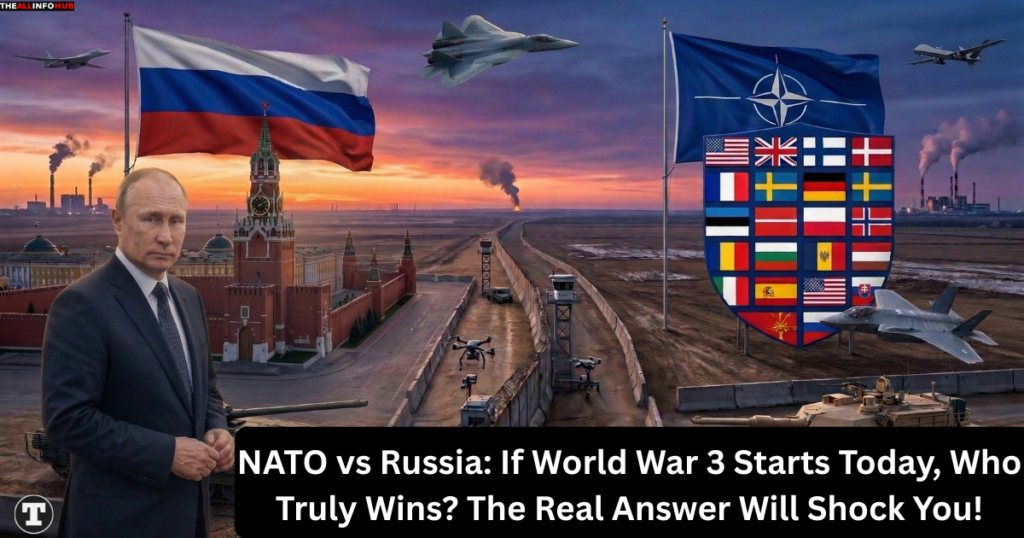
The world is currently going through a very tense and unpredictable phase. With ongoing conflicts, shifting alliances, and rising geopolitical tensions, people often wonder about the worst-case scenario: World War 3. When we talk about global superpowers today, the biggest potential clash that comes to mind is NATO vs Russia.
But if a full-scale war were to break out today, who would actually win? To understand the true reality of a NATO vs Russia dynamic, we need to look far beyond just the number of soldiers. We must compare their technology, economic power, naval strength, cyber capabilities, and the terrifying reality of nuclear weapons.
Let’s dive deep into this ultimate military comparison to see who really holds the edge in 2026.
What Exactly is NATO? (The Basics)
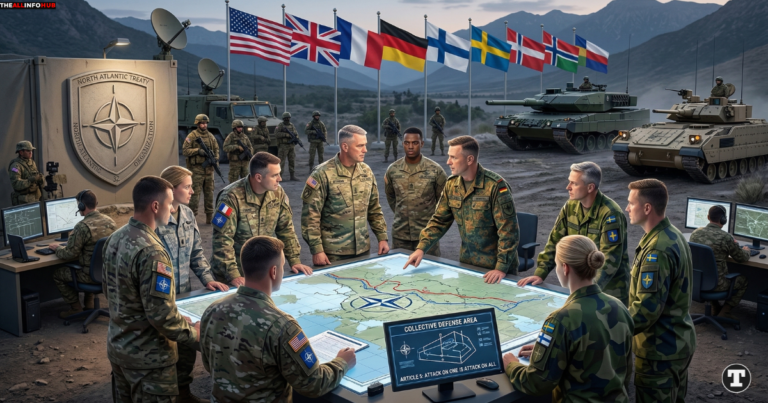
Before we compare the two sides, it is important to understand what NATO actually is. NATO stands for the North Atlantic Treaty Organization. It was formed back in 1949 after World War 2. The primary goal of this alliance was to create a collective security shield against the expansion of the Soviet Union.
The core of NATO is Article 5. This article simply states that “an armed attack against one member is considered an attack against them all.” If one NATO country is attacked, all other members must come to its defense.
Today, NATO is a massive military powerhouse consisting of 32 member countries, including the United States, the United Kingdom, France, Germany, and newly joined nations like Finland and Sweden. It is the most powerful military alliance in human history.
The Power of the Russian Federation
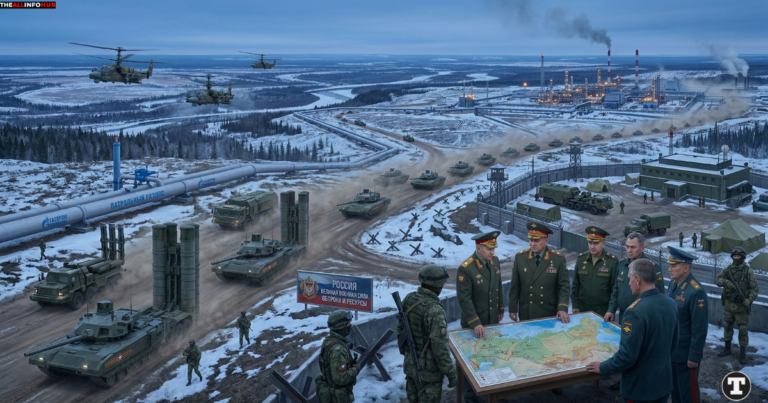
On the other side of the chessboard sits Russia. Russia is the largest country in the world by landmass, spanning across Europe and Asia. When the Soviet Union collapsed in 1991, Russia inherited its massive military machine.
Russia has a deeply rooted military culture, vast natural resources (like oil and gas), and a strong central leadership. In any NATO vs Russia scenario, Russia’s sheer size, its ability to endure long and brutal conflicts, and its massive reserves of military hardware make it a truly formidable force. They also possess the world’s largest stockpile of nuclear weapons.
NATO vs Russia: The Conventional Military Numbers
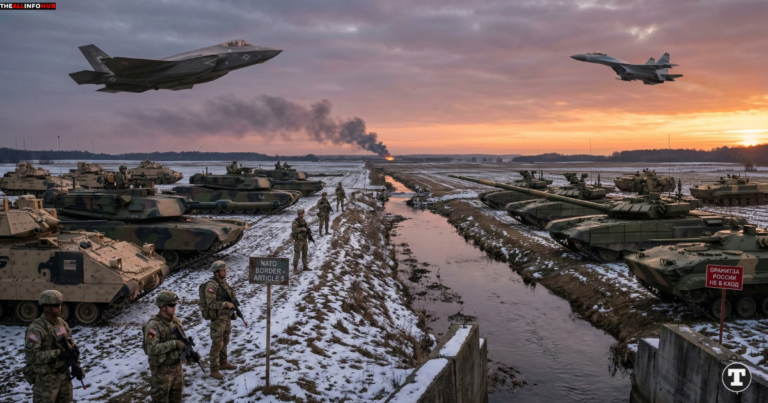
Let’s look at the basic numbers first. In a conventional (non-nuclear) NATO vs Russia conflict, the numbers heavily favor the Western alliance.
Manpower and Troops: NATO has a combined active military force of over 3.3 million personnel. The United States alone provides a massive chunk of this highly trained force. Russia, on the other hand, has around 1.3 million active personnel. Even with emergency mobilization and reserve troops, NATO has a much larger pool of soldiers.
Defense Budget: Wars cost money, and this is where the gap is massive. The combined annual defense budget of NATO countries is well over $1.2 trillion. The US alone spends over $800 billion. Russia’s defense budget, even when heavily increased for wartime production, is estimated to be around $100 billion to $140 billion. More money means better training, advanced weapons, better body armor, and superior logistics.
Ruling the Skies: Air Force Comparison
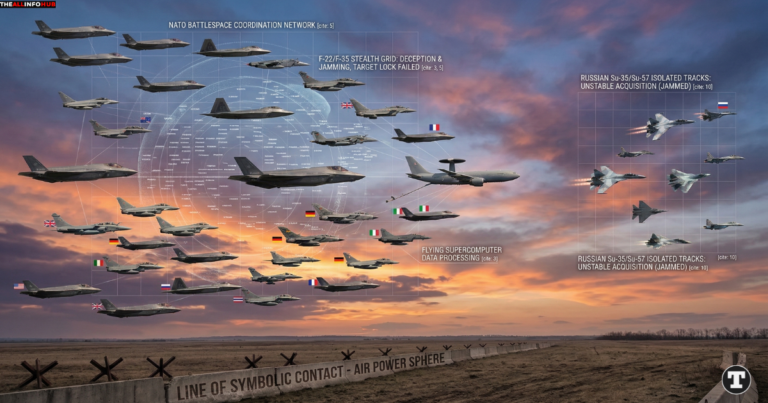
Air superiority is the most critical factor in modern warfare. If you control the skies, you control the war. In a NATO vs Russia air battle, NATO holds a very clear and distinct edge.
NATO possesses over 20,000 military aircraft. This includes thousands of advanced 5th-generation stealth fighters like the American F-35 and F-22 Raptor. These planes are essentially flying supercomputers that are nearly invisible to enemy radar.
Russia has roughly 4,000 military aircraft. While they have excellent, highly maneuverable fighters like the Su-35 and are developing their own stealth jet (the Su-57), they simply cannot match the sheer volume, stealth technology, and coordinated radar systems of the combined NATO air forces.
The Ground War: Tanks, Artillery, and Geography
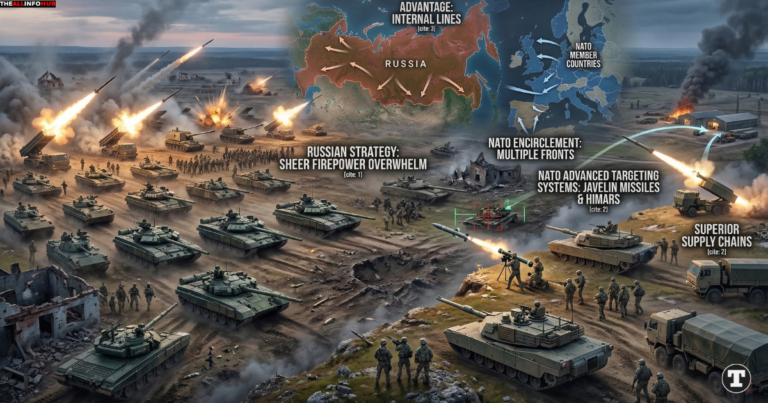
Historically, Russia has always relied on a massive land army. They possess thousands of tanks (like the T-90 and T-72 series) and a terrifying amount of heavy artillery. In a ground war, Russia’s strategy is often to overwhelm the enemy with sheer firepower.
However, recent conflicts have changed how ground wars are fought. Modern anti-tank missiles (like the Javelin) and precision-guided rocket systems (like HIMARS) used by NATO countries have proven that older tanks are highly vulnerable. While a NATO vs Russia ground war in Eastern Europe would be incredibly brutal, NATO’s advanced targeting systems, modern Abrams and Leopard tanks, and superior supply chains give them the upper hand.
It is also important to mention geography. Russia has the advantage of “internal lines”—meaning they can move troops around inside their own massive country safely. However, NATO surrounds Russia’s western borders, creating multiple fronts that Russia would have to defend simultaneously.
Naval Power: The Battle of the Seas
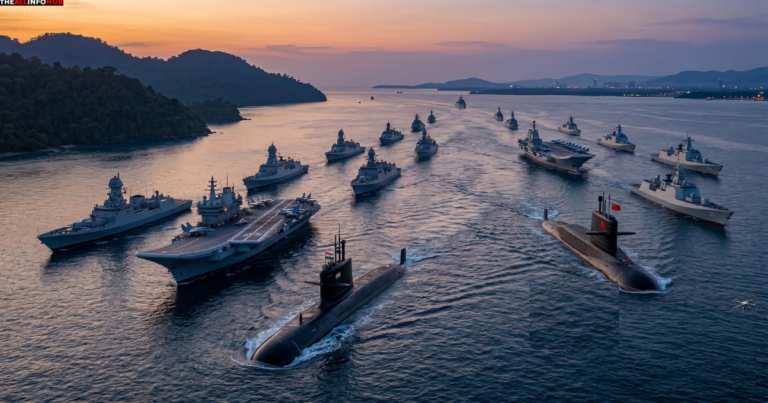
When it comes to the ocean, the NATO vs Russia comparison is quite one-sided in terms of surface ships.
The US Navy alone operates 11 massive nuclear-powered aircraft carriers, which function as floating military bases that can project power anywhere in the world. The UK, France, and Italy also contribute powerful aircraft carriers and destroyers to the alliance.
Russia has only one aging aircraft carrier (the Admiral Kuznetsov), which is rarely deployed. However, Russia’s naval strength lies hidden beneath the waves. They have a highly advanced and deadly fleet of nuclear-powered submarines. These submarines are extremely quiet and are capable of sinking aircraft carriers or launching devastating strikes from anywhere on the globe.
The Invisible Battlefield: Cyber and Space Warfare
If World War 3 happens today, the first shots might not be fired from a gun, but from a keyboard. In a modern NATO vs Russia conflict, cyber warfare would play a huge role.
Both sides have elite teams of hackers capable of shutting down the enemy’s power grids, banking systems, water supplies, and communication networks. Furthermore, both NATO and Russia have capabilities in space, meaning they could target and blind each other’s GPS and military satellites, making smart bombs and guided missiles useless.
Economy and Logistics: The Hidden Weapons
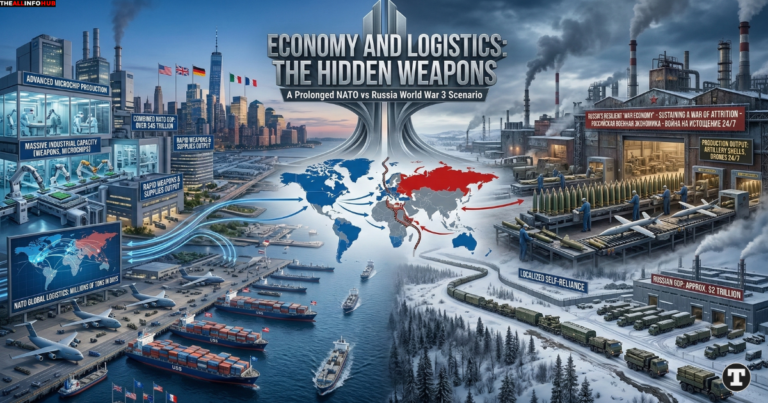
Wars are not just fought with bullets; they are fought with money, factories, and supply lines. The combined Gross Domestic Product (GDP) of NATO countries is over $45 trillion. Russia’s GDP is roughly around $2 trillion.
In a prolonged NATO vs Russia World War 3 scenario, NATO has the industrial capacity to produce weapons, advanced microchips, and supplies at a rate Russia simply cannot match. Furthermore, NATO’s global logistics network can move millions of tons of equipment anywhere in the world within days.
However, Russia has adapted. Recent sanctions have forced them to become highly self-reliant. They have shifted to a “war economy,” producing artillery shells and drones 24/7, proving that they can sustain a long war of attrition.
The Ultimate Equalizer: Nuclear Weapons
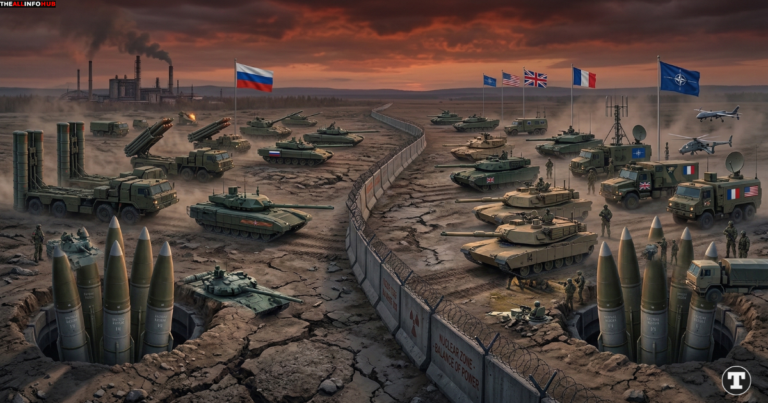
If the conventional numbers are so heavily in favor of the alliance, why hasn’t a NATO vs Russia war happened yet? The answer is simple and terrifying: Nuclear Weapons.
Russia possesses the largest nuclear arsenal in the world, with roughly 5,500 to 6,000 warheads. NATO (primarily the US, France, and the UK) possesses a roughly equal number of nuclear weapons.
Because of a strategic concept called MAD (Mutually Assured Destruction), an all-out NATO vs Russia war would almost certainly result in both sides launching nuclear missiles. In this scenario, it doesn’t matter how many tanks or fighter jets you have. There is no winner. The entire world would face complete devastation, and human civilization as we know it could end. This delicate nuclear balance is the main reason why a direct war has been avoided for over 75 years.
Final Verdict: Who Has the Edge in 2026?
So, who wins if World War 3 starts today?
If we look strictly at a conventional, non-nuclear World War 3, NATO has a massive edge. Their unmatched economic power, technological superiority, massive stealth air force, and global alliances make them the strongest military force in human history. In a purely conventional NATO vs Russia fight, NATO would eventually win, though it would take a terrible toll on Europe.
However, a direct war between these two nuclear superpowers would almost certainly not stay conventional. The moment one side faces complete defeat, the risk of nuclear weapons being used becomes very real. Therefore, in the ultimate NATO vs Russia scenario, the true edge goes to nobody, because a nuclear World War 3 has no winners—only losers.
Conclusion: The Final Verdict on a Global Clash
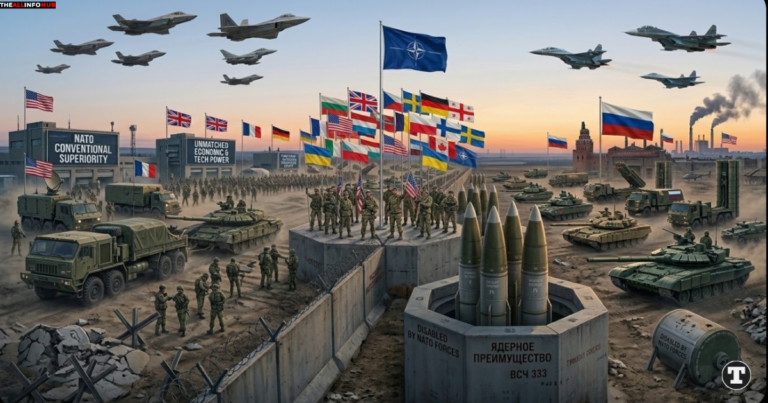
In conclusion, the debate of NATO vs Russia is one of the most terrifying scenarios in modern history. If World War 3 were to break out today using only conventional, non-nuclear weapons, NATO’s massive economic power, advanced stealth technology, and significantly larger troop numbers give them a clear and undeniable edge. They simply have more resources to sustain a long, global fight.
However, the harsh reality of a NATO vs Russia conflict is deeply overshadowed by the ultimate threat: nuclear weapons. Because both superpowers possess enough nuclear warheads to destroy the planet multiple times over, a direct war would almost certainly result in Mutual Assured Destruction (MAD). In that terrifying situation, the size of the army or the strength of the economy no longer matters.
Ultimately, if a NATO vs Russia war starts today, there are no true winners. The only real victory for both sides—and for the rest of humanity—is ensuring that this war never actually begins.
What are your thoughts on this? Do you think modern technology will prevent a global war, or are we closer to World War 3 than ever before? Let us know in the comments below, and share this article to start a discussion!
Frequently Asked Questions (FAQs)
Q1. Who has a bigger military: NATO or Russia? Answer: When it comes to active personnel, NATO has a much larger combined military force. NATO has over 3.3 million active military personnel, whereas Russia has approximately 1.3 million active troops.
Q2. What would happen if a direct NATO vs Russia war started today? Answer: If a conventional NATO vs Russia war started, NATO would have a strong advantage due to superior air power, technology, and economic backing. However, experts fear that if either side faced total defeat, it could quickly escalate into a catastrophic nuclear war.
Q3. Does Russia have more nuclear weapons than NATO? Answer: Yes, Russia currently holds the world’s largest stockpile of nuclear warheads, estimated at around 5,500 to 6,000. However, the combined nuclear arsenals of NATO members (primarily the US, UK, and France) are roughly equal in destructive capability.
Q4. Why hasn’t a World War 3 between NATO and Russia happened yet? Answer: The primary reason a direct NATO vs Russia conflict has been avoided is the concept of Mutually Assured Destruction (MAD). Both sides know that a full-scale war would likely end in a nuclear apocalypse, leaving no winner.
Q5. Which side has a stronger Air Force? Answer: NATO holds a massive edge in air superiority. They have thousands of advanced 5th-generation stealth fighters (like the F-35) and a highly coordinated global radar network, which significantly outnumbers Russia’s air capabilities.
- You might be interested in reading this page as well
- If War Breaks Out Today: India vs China Military Power 2026 Reality Check