
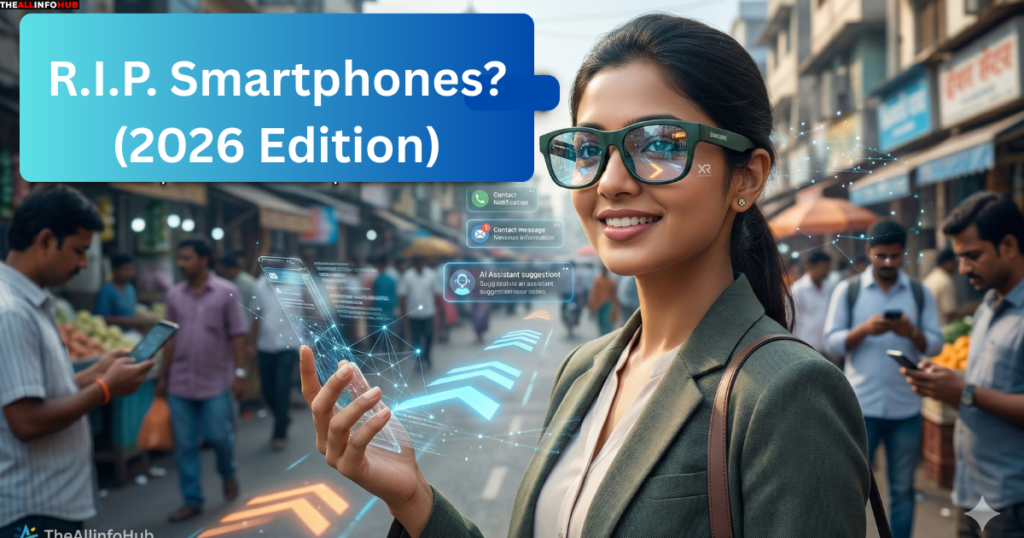
Augmented Reality (AR) and smart glasses are no longer just concepts from science fiction—they have become the biggest tech story of 2026. Today, wearable tech isn’t limited to just our wrists; it has reached our eyes. In this blog, we will do a deep dive into the future of smart glasses AR, exploring the massive changes coming in 2026-2027 and whether these devices can truly replace our beloved smartphones.
We will break down this tech shift in easy-to-understand language so you can see exactly how your digital life is about to transform in the next few years.
1. What Does “Future of Smart Glasses AR” Actually Mean?
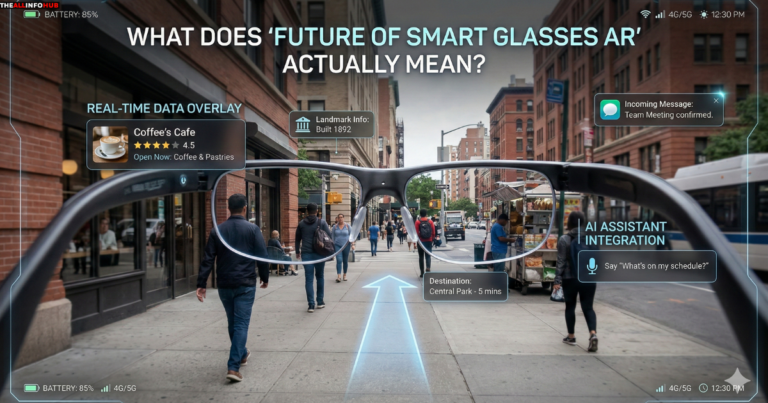
The future of smart glasses AR represents a world where your “screen” isn’t in your pocket, but right in front of your eyes. Imagine walking down a busy street and never having to look down at your phone; your navigation arrows are projected directly onto your glasses’ lenses, showing you exactly where to turn.
These devices look almost like normal eyewear but are packed with tiny projectors, advanced sensors, and powerful AI chips. When we discuss the future of smart glasses AR, we aren’t just talking about glasses that play music—we are talking about devices that overlay digital information onto the real world.
Main Highlights:
Glanceable Info: View notifications and messages without ever reaching for your phone.
Contextual AI: Your glasses “see” what you see. Whether it’s a historical monument or a product in a store, AI provides instant details.
Hands-free Life: Following a recipe while cooking or checking a map while riding a bike becomes safer and more intuitive.
2. Timeline: When Are These Glasses Arriving?
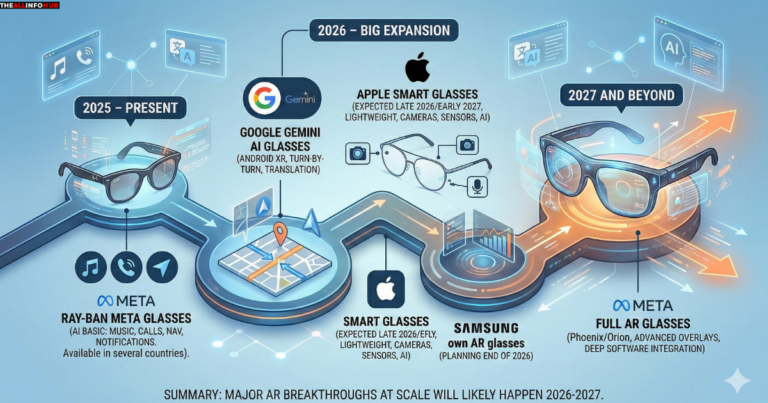
The next few years will be the “iPhone moment” for the future of smart glasses AR. Here is how the roadmap looks:
2025 (The Foundation): Meta, in partnership with Ray-Ban, has already successfully launched basic AI glasses. People are using them daily for music, calls, and capturing POV photos.
2026 (The Big Bang): Google is preparing to launch its “Gemini AI Glasses.” This is also the year we expect the first consumer-ready AR glasses from Samsung and Apple to hit the production lines. 2026 will be known as the “Year of Competition” in the future of smart glasses AR.
2027 (Mass Adoption): Tech experts predict that by 2027, Meta will finally release its most advanced AR glasses (Project Orion) to the general public. These will be lightweight enough for all-day wear.
3. Who Are the Key Players Driving This Change?
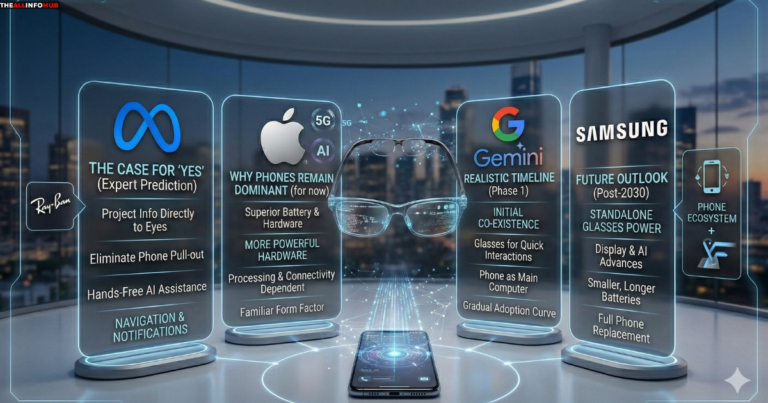
The world’s biggest tech giants are putting all their resources into the future of smart glasses AR race:
Meta (Zuckerberg’s Vision): Meta is currently leading the pack. Their strategy is two-fold: stylish audio/camera glasses (like the Ray-Ban Meta) and “True AR” glasses like Project Orion that bring a full digital world to your eyes. Mark Zuckerberg believes these will one day be as common as smartphones.
Apple (The Perfectionist): Apple is following its usual “patience” strategy. Reports suggest Apple is working on smart glasses that weigh less than 50 grams and are built from premium materials like titanium. Their focus is on “Visual Intelligence”—where you look at an object, and Siri instantly tells you everything about it.
Google & Samsung (The Powerful Duo): Google has learned from its “Google Glass” days and is now building the “Android XR” operating system specifically for the future of smart glasses AR. By partnering with Samsung and Qualcomm, they are creating a perfect mix of hardware and software. Samsung is expected to launch AR glasses with high-end micro-LED displays by late 2026.
4. Can Smart Glasses Really Replace Smartphones?
This is the billion-dollar question. Will we eventually throw away our phones?
The Realistic Answer: Not immediately, but it is highly likely by 2030. For now, smart glasses and smartphones will act as “Partners.” Glasses will handle quick interactions, while the phone stays in your pocket to provide the processing power and battery life. However, as chip technology (like the Snapdragon AR series) improves, glasses will become standalone computers. The ultimate goal of the future of smart glasses AR is to move the computer from your pocket to your face.
5. Features That Will Define the Future of Smart Glasses AR
What makes these glasses truly “Smart”? These top features are the game-changers:
Real-Time Translation: Imagine talking to someone in Japanese while your glasses show you Hindi or English subtitles in real-time.
Object Recognition: Instantly identify plants, gadgets, or landmarks just by looking at them.
Gesture Control: Control your apps by simply moving your fingers in the air—no physical buttons needed.
Health Tracking: View your heart rate and step count displayed subtly in the corner of your vision while you walk.
6. Challenges on the Road Ahead
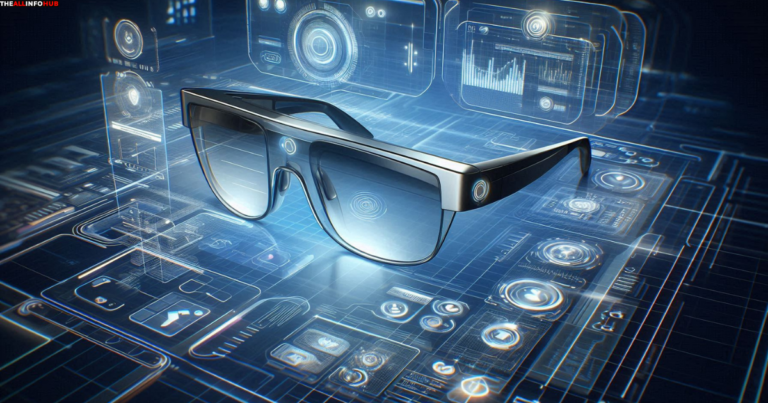
Despite the progress, the future of smart glasses AR still faces some major hurdles:
Battery Life: Fitting a battery that lasts all day into a thin pair of glasses is a massive engineering challenge.
Privacy: Having a camera on your face at all times raises concerns. Companies are adding “Recording Indicators” (LED lights) so others know when a camera is active.
Cost: Initially, these devices will be expensive, ranging from ₹40,000 to ₹80,000, making them a luxury for now.
Final Thoughts
Smartphones changed our lives, but the future of smart glasses AR is set to take our digital experience out of a small screen and blend it into the real world. This shift is exactly like the arrival of the first iPhone in 2007. People might be hesitant at first, but once they experience the convenience, there will be no looking back.
Conclusion: 2026 and 2027 are going to be the most significant years for smart eyewear. Are you ready to wear a supercomputer on your eyes?
Frequently Asked Questions (FAQs)
1. Are these glasses comfortable for long hours? Yes, the 2026 models are designed to be extremely lightweight (around 50-70 grams), making them comfortable enough to wear for 4-5 hours at a time, just like normal glasses.
2. Do I need a separate SIM card for them? Most initial models will use your phone’s internet via Bluetooth/Wi-Fi. However, standalone models with eSIM support are expected to launch soon.
3. Can I get prescription lenses for smart glasses? Absolutely! Brands like Meta and Apple have partnered with major eyewear companies so you can easily fit your prescription lenses into the smart frames.
- You might be interested in reading this page as well
- Samsung Galaxy S26 Ultra 2026 Review – Specs, Price & Top Features You Must Know